
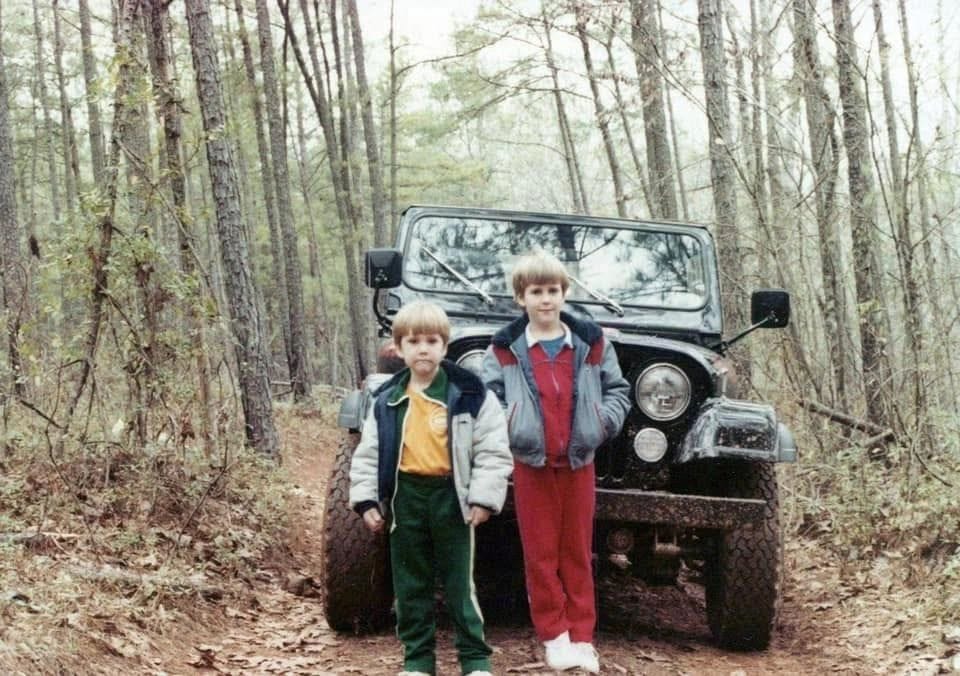
Last week, I was reminded through a few unrelated moments of perspective just how awesome it's been to live life in the place I've called home since birth: Cherokee County, North Georgia. And it was something my brother shared, an old 80's pic of us in what is today Towne Lake, that sparked some all too familiar direct messages of friends old and new, "don't you wish it was still like that today?", or the other thousand ways to say, "Not In My BackYard." What's often called a NIMBY perspective. While I do have empathy for the perspective, it's the lack of self-awareness that can be really frustrating.
You see, there’s a funny thing about the phrase “Not in my backyard.”
It sneaks in a quiet assumption: that the backyard is actually yours; fixed, permanent, somehow more yours than anyone else’s. But if you zoom out even a little, that story falls apart.
There was always someone here before you.
Before your subdivision, there was probably a pasture. Before there was pasture, there was farm. Before the farm, there were woods. And before that, there were people who didn’t call it “property” at all; just home.
Every generation shows up, falls in love with what they find, and then tries to freeze it in time. We all do it, just in different ways.
“I moved here for the quiet, I don’t want apartments.”
“I moved here for the character, no new businesses.”
“I moved here for the charm, no more traffic.”
What we’re really saying is:
“I like the benefit of my arrival… but I don’t want the cost of yours.”
That’s the blind spot.
Because the truth is:
Your residence was somebody’s “development.” Your residence was once “ruining the view.” Your car was once “adding to the traffic.”
Someone, at some point, looked at you the way you’re looking at the next person. Now, does that mean every new project is good? Of course not. There are bad fits and lazy plans. Being skeptical can be wise. Protecting truly fragile things like community, environment, and history matters deeply.
But that’s different from the reflexive, “No, because I’m here now.”
The more honest position sounds like this:
“I love this place. I’m grateful I got here when I did.
I know others need a place too.
So how do we grow in a way that’s fair, thoughtful, and humane?
Even if it changes what I’m used to.”
That posture doesn’t shout NIMBY (not in my back yard) or YIMBY (yes in my back yard). It just says: I remember I’m not the first one here, and I won’t be the last.
And when we remember that, a few things shift:
We argue a little softer. We listen a little longer. We think less about only “protecting what’s mine” and more about “stewarding what we've been given.”
So if you want a simple line to carry into these conversations, here it is:
“There was always someone here before you, and there will be someone after you. Let’s build a future like we believe that.”
That’s where humility shows up. That’s where real community gets built — not just in our backyards, but around the table where everybody gets a seat.